Interferential EMS
Calms pain and muscle spasm
Delivered with the Richmar TheraTouch CX2
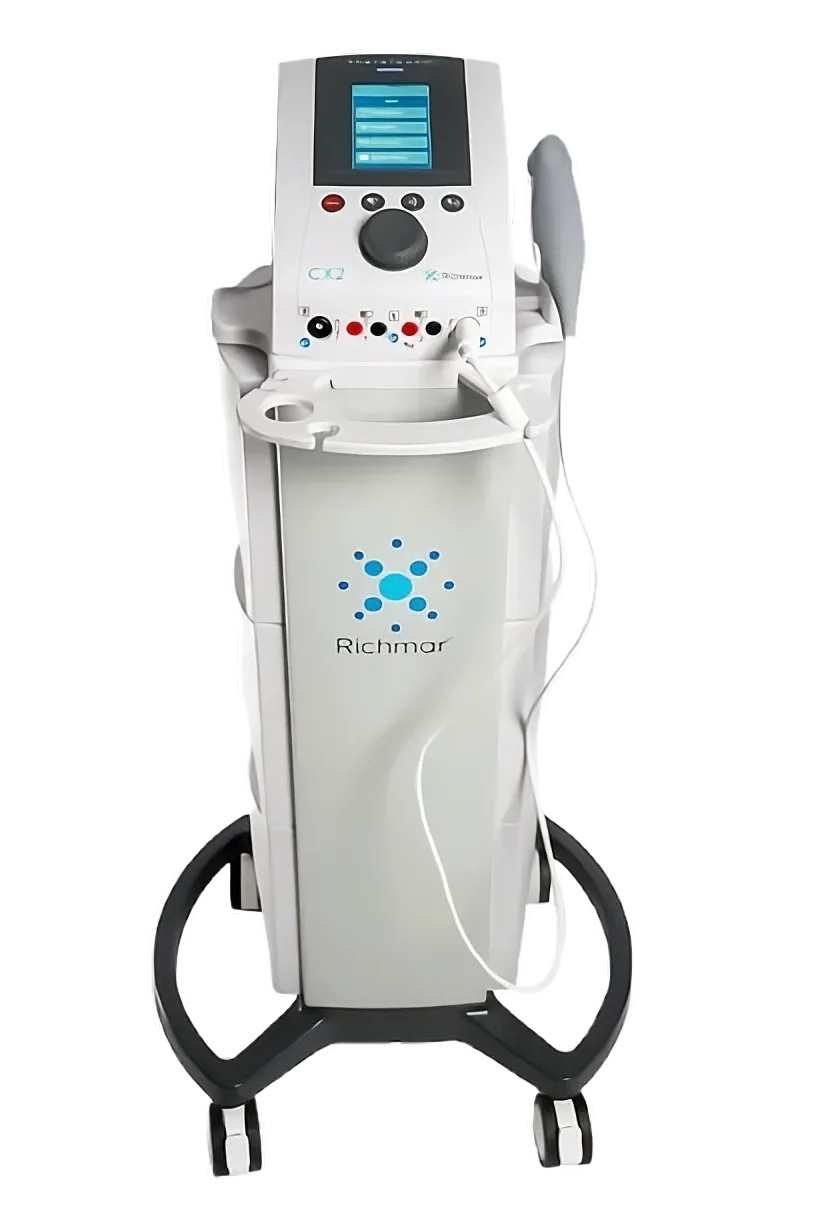
Interferential electrical muscle stimulation, or EMS, delivers low-level electrical currents through small electrode pads placed around the injured area. The currents stimulate the nerves in a way that can dampen pain signaling and may help ease muscle spasm.
EMS is often used early in a treatment plan, especially after a recent accident, because it may help calm acute pain and let the body tolerate hands-on care sooner. Research finds interferential current relieves pain about as well as TENS. Sessions are short, comfortable, and require nothing from you but lying still.
What it can help with
- Acute pain after an accident
- Muscle spasm
- Muscle guarding and tension
- Post-injury soreness
- Pain that limits daily movement
What a session is like
Small adhesive pads are placed on the skin around the treatment area. You feel a gentle tingling or light tapping sensation that stays comfortable for the full session, usually 10 to 15 minutes.
Who it may not be right for
- Pregnancy
- Epilepsy
- A pacemaker or other implanted electronic device
- Placement over an active or suspected tumor, the front of the neck, or the eyes
When to seek emergency care
Electrical stimulation treats comfort and mobility and is not a substitute for emergency care. Seek immediate medical attention for numbness, weakness, loss of movement, or any change in bladder or bowel control.
Medically reviewed
Reviewed by Dr. Milad Mandavi, D.C., California Chiropractic License #37275. Last reviewed July 11, 2026.
- TENS and interferential current: similar effects in relieving pain (systematic review with meta-analysis)Accessed 2026-07-11
- Transcutaneous Electrical Nerve Stimulation (StatPearls)Accessed 2026-07-11
- Electrophysical Agents: Contraindications and Precautions (Physiotherapy Canada, 2011)Accessed 2026-07-11
This information is for general education and is not a substitute for individual medical advice. Talk with a qualified provider about your specific condition.
Common questions
Does EMS hurt?
No. The intensity is adjusted to a level that feels like a mild tingling or gentle tapping. It should never be painful, and it is turned down immediately if it feels too strong.
Why is EMS used early in treatment?
After a recent injury the muscles are often in spasm and too irritated for direct hands-on work. EMS calms the area first so the rest of your care can begin sooner and work better.
Is this the same as the muscle stimulators sold online?
The clinic uses a clinical-grade interferential unit that is more precise and more powerful than consumer devices, applied by trained staff as part of a supervised treatment plan.
The information on this website is provided for educational purposes only and should not be considered medical advice. Individual treatment recommendations are based on a comprehensive examination and clinical findings.